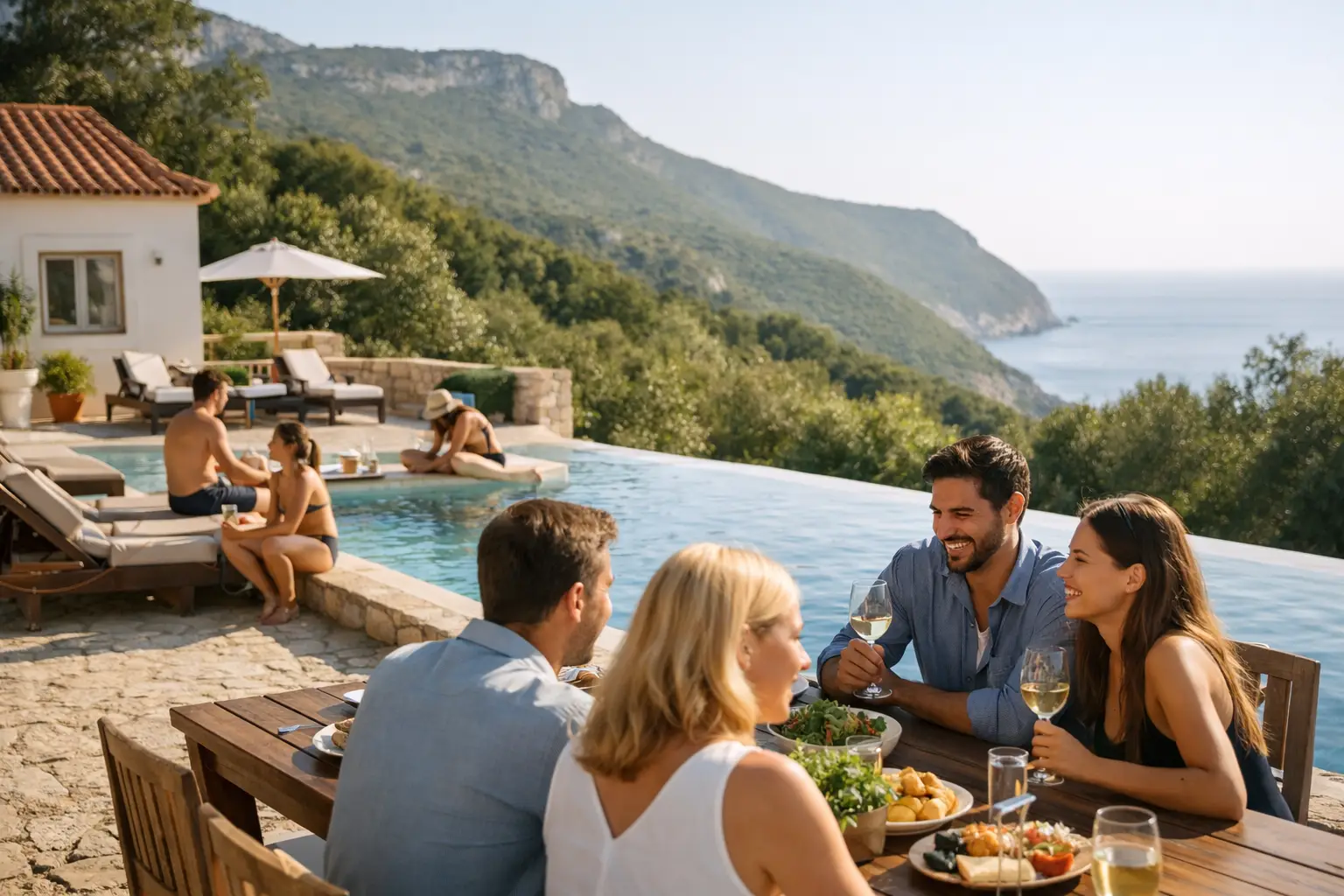
Picture a long breakfast table, coffee still warm, the windows open to birdsong, and nobody checking their watch before the dining room closes. That is often the real answer behind the question, is private accommodation better for groups. For many family trips and getaways with friends, the choice is not only about where to sleep. It is about how people want to spend time together.
A hotel can work beautifully for certain kinds of travel. If a group is staying one night, attending an event, or planning to spend very little time on the property, separate rooms and standard services may be enough. But when the goal is to relax, reconnect, celebrate, and enjoy the setting itself, private accommodation often creates a very different experience.
Why private accommodation often suits groups better
The biggest advantage is simple: shared space with real privacy. In a hotel, even close-knit groups tend to split apart. People retreat to separate rooms, meet briefly in the lobby, then scatter again. The trip becomes logistically easy, but not always intimate.
In a private house or farm stay, the time between activities becomes part of the experience. Breakfast stretches into conversation. Someone reads on the terrace while children play nearby. Dinner can be slow, unhurried, and personal. Instead of coordinating around public spaces, your group has a place of its own.
That changes the rhythm of a stay. It feels less transactional and more like living somewhere together, even if only for a few days. For families, this often means less stress. For friends, it usually means more time that feels natural rather than scheduled.
Is private accommodation better for groups who want quality time?
In many cases, yes. Group travel is rarely only about sightseeing. It is also about birthdays, reunions, holidays, and the rare chance to gather everyone in one place. Privacy matters because it lets people be fully at ease.
That can mean children can nap in a quiet room while adults sit outside with a glass of wine. It can mean one person cooks, another sets the table, and everyone drifts in without the formality of a restaurant reservation. These small moments are often what guests remember most.
Private accommodation also gives groups the freedom to set their own pace. There is no pressure to leave the pool because it is shared, no concern about noise traveling into a hallway, and no need to reserve a table just to eat together. The atmosphere becomes calmer and more personal, which is especially valuable on trips designed around rest.
Space changes the mood of a trip
Space is not just about square footage. It is about how comfortably people can move through a stay without feeling crowded. This is one reason private accommodation tends to feel more generous for groups than booking several hotel rooms.
A living room, outdoor terrace, garden, dining area, and full kitchen create options. Some people can socialize while others step away for a quiet moment. Parents can keep children close without being confined to one room. Grandparents, couples, and friends can share the same property while still having breathing room.
In a scenic rural setting, that feeling becomes even stronger. Nature gives the stay a wider sense of calm. Morning light, open air, and the sounds of the countryside help a group settle into a slower, more restorative rhythm. It is not just extra room. It is a better environment for being together.
The cost question depends on the group
Many travelers assume hotels are the more practical choice, but that is not always true. For groups, value needs to be measured differently.
A private property may look more expensive at first glance, yet when the cost is shared among several adults or a family group, it can compare favorably with booking multiple hotel rooms. Then there are the extras. A kitchen reduces the need for every meal out. Shared common areas mean you are paying for spaces you will actually use together, rather than repeating the same room several times.
That said, it depends on the trip. If the group wants daily room service, a staffed bar, or the predictability of a large hotel operation, private accommodation may not feel as convenient. But if the priority is comfort, privacy, and the ability to gather in one place, the overall value is often stronger.
When hotels may be the better choice
A balanced answer matters here. Private accommodation is not automatically better for every group.
Hotels can be ideal for short city breaks, business travel, or trips centered on external plans where the accommodation is simply a base. They also suit groups who prefer fully standardized service and do not need shared living space. If everyone is arriving and leaving on different schedules, separate rooms in a hotel can simplify things.
Accessibility can also be a factor. Some travelers feel more comfortable in properties with elevators, 24-hour front desks, or on-site dining available at all times. For certain group dynamics, that level of structure is useful.
So the better question may be this: what kind of trip is your group actually trying to have? If the stay itself is part of the destination, private accommodation usually has the advantage.
Is private accommodation better for groups in nature settings?
Almost always, especially when the landscape is part of the reason for traveling. In a place defined by hills, sea air, vineyards, or protected countryside, staying privately allows guests to experience that setting more fully.
You are not just visiting the area during the day and returning to a generic room at night. You remain inside the atmosphere of the destination. Mornings feel quieter. Evenings feel more intimate. A terrace, a garden, or a view becomes part of the trip rather than an amenity shared with strangers.
This is where a rural stay can be especially meaningful. In and around places such as Arrábida Natural Park, private houses create the chance to experience Portugal at a gentler pace. The landscape shapes the day. Meals feel more rooted in place. Time with family and friends becomes less interrupted and more memorable.
For travelers seeking that kind of escape, properties like Quinta da Arrábida offer something a standard stay rarely can - privacy, comfort, and a genuine sense of belonging to the setting for a few days.
The emotional side of traveling together
People often book group travel for practical reasons, but they remember it for emotional ones. The right accommodation supports those moments without forcing them.
A private stay encourages the kind of closeness that hotels often dilute. There is room for shared meals, spontaneous conversations, and quiet rituals that become part of the trip. Children feel freer. Adults unwind more quickly. Friends have space to talk late into the evening without feeling they are still in a public environment.
This matters because modern travel can easily become overplanned. Private accommodation softens that. It makes room for stillness, for lingering, for simply enjoying the company you came for. That is often the real luxury.
How to decide what fits your group best
Start with the purpose of the trip. If your group is celebrating, reconnecting, or choosing a destination specifically to slow down, private accommodation is usually the stronger fit. If the priority is flexibility, intimacy, and shared time, a private house or rural retreat gives those things naturally.
Then consider the mix of ages and personalities. Families with children, multigenerational groups, and close friends often appreciate having both communal areas and private bedrooms. It allows everyone to stay together without feeling on top of one another.
Finally, think about what you want the stay to feel like. Efficient and simple can be perfect for some trips. Warm, spacious, and deeply personal is better for others. The best choice is the one that supports the atmosphere you want to create.
If your ideal getaway includes long meals, open space, and the rare pleasure of having a beautiful place entirely to yourselves, private accommodation is not just better for groups. It is often what turns a trip into time well spent.